Not long ago, remote work in healthcare felt like a temporary solution to an urgent global problem. Providers adapted quickly, telehealth visits surged, and teams learned how to collaborate without being in the same room. Even after in-person care resumed, telehealth usage remains 38 times higher than pre-pandemic levels, according to McKinsey & Company. But as in-person care returned, many assumed remote work would fade with it.
That didn’t happen.
Instead, remote work in healthcare evolved. It didn’t disappear. It became more intentional, more strategic, and more selective. Today, healthcare organizations are not asking if remote work should exist, but where it works best. This shift is shaping how care is delivered, how teams are built, and how providers experience their day-to-day work.
The Shift from Emergency Response to Long-Term Strategy
During the height of the pandemic, remote healthcare was widely adopted out of necessity. Providers had to find ways to stay connected with patients while minimizing risk. Telehealth platforms became essential overnight, and administrative teams moved offsite almost instantly.
Now, healthcare leaders are taking a closer look at what actually worked.
They’re asking important questions:
Which roles performed well remotely?
Where did productivity improve or decline?
How did patient outcomes and satisfaction change?
The answers are leading to a more refined approach. Remote healthcare is no longer a one-size-fits-all solution. Instead, it is being applied where it adds real value to both patients and providers.
The Right Role, The Right Setting

One of the biggest realizations in recent years is that healthcare roles thrive in different environments. While some responsibilities benefit from in-person interaction, others are perfectly suited for remote healthcare, allowing providers to deliver care in more flexible and efficient ways.
Direct patient care, especially in acute or hands-on settings, continues to be strengthened by in-person presence, where immediate assessment and intervention are essential. At the same time, many roles have proven to be highly effective in remote settings, expanding how care can be delivered and supported.
These include:
- Telehealth consultations for non-emergency cases
- Medical coding and billing
- Care coordination and case management
- Mental health services and counseling
- Administrative and support functions
By identifying which roles align best with remote healthcare, organizations can build more balanced and high-performing teams. This thoughtful approach allows providers to maximize the benefits of both remote and in-person care, ultimately improving efficiency, access, and patient outcomes.
Better Access for Patients, Greater Flexibility for Providers
One of the strongest advantages of remote healthcare is improved access. Patients in rural or underserved areas can now connect with providers more easily. Those with mobility challenges, chronic conditions, or time constraints benefit from not having to travel for every appointment.
For healthcare providers, the benefits are just as meaningful.
Remote work can offer:
- More flexible schedules
- Reduced commute time
- Better work-life balance
- Opportunities to focus without constant interruptions
This flexibility is becoming a key factor in job satisfaction. In a field where burnout is a serious concern, remote healthcare offers a way to retain skilled professionals and support their well-being.
Technology Made It Possible, But People Make It Work
The rise of remote healthcare would not be possible without technology. From secure video platforms to digital patient records, the tools are now in place to support remote collaboration and care delivery.
But technology alone is not enough.
Successful remote healthcare depends on:
- Clear communication between teams
- Strong workflows and defined processes
- Ongoing training and support
- Trust between leadership and staff
Healthcare organizations that invest in these areas are seeing better outcomes. Remote teams can be just as connected and effective as in-person ones, and sometimes even more so.
A More Competitive Hiring Landscape
Another important shift is how remote healthcare is changing recruitment.
Healthcare providers are no longer limited to hiring within a specific geographic area. They can now access a broader talent pool, bringing in skilled professionals from different regions or even countries.
This creates both opportunities and challenges.
On one hand, organizations can find highly qualified candidates more easily. On the other hand, competition for top talent has increased. Providers now have more options, and they are often looking for roles that offer flexibility, growth, and purpose.
For employers, this means adapting their approach:
- Offering flexible work arrangements
- Creating supportive and inclusive environments
- Highlighting career development opportunities
Remote healthcare is not just changing how care is delivered. It is also reshaping how teams are built.
Maintaining Quality and Connection
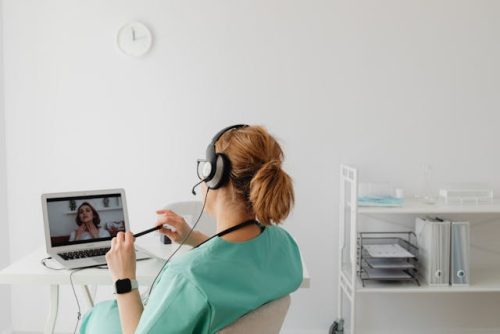
One concern often raised about remote healthcare is whether it can maintain the same level of quality and personal connection as in-person care.
The answer depends on how it is implemented.
When done thoughtfully, remote healthcare can:
- Improve follow-up care through more frequent touchpoints
- Encourage patient engagement through convenience
- Allow providers to focus more on communication
However, it is important to recognize its limits. Some situations will always require face-to-face interaction. The goal is not to replace in-person care, but to complement it. Healthcare providers who strike this balance are finding that remote and in-person care can work together seamlessly.
The Future Is Hybrid and Intentional
Looking ahead, it is clear that remote healthcare is here to stay, but in a more refined form.
The future is not fully remote or fully in-person. It is a hybrid model that combines the strengths of both.
In this model:
- Patients receive care in the most appropriate setting
- Providers have more flexibility in how they work
- Organizations operate more efficiently
This approach requires ongoing evaluation and adjustment. What works today may need to evolve tomorrow. But one thing is certain. Remote healthcare will continue to play a key role in shaping the industry.
Ready to Grow with the Future of Healthcare?
Whether you are looking to expand your career, explore flexible opportunities, or become part of a forward-thinking team, the right partner can make all the difference.
At MedCore Solutions, we connect healthcare professionals with meaningful opportunities that align with their skills, goals, and lifestyle. From remote roles to in-demand specialties, we help you navigate the changing healthcare landscape with confidence.
Partner with MedCore Solutions today and take the next step toward a more flexible, rewarding, and future-ready healthcare career. Contact us here.