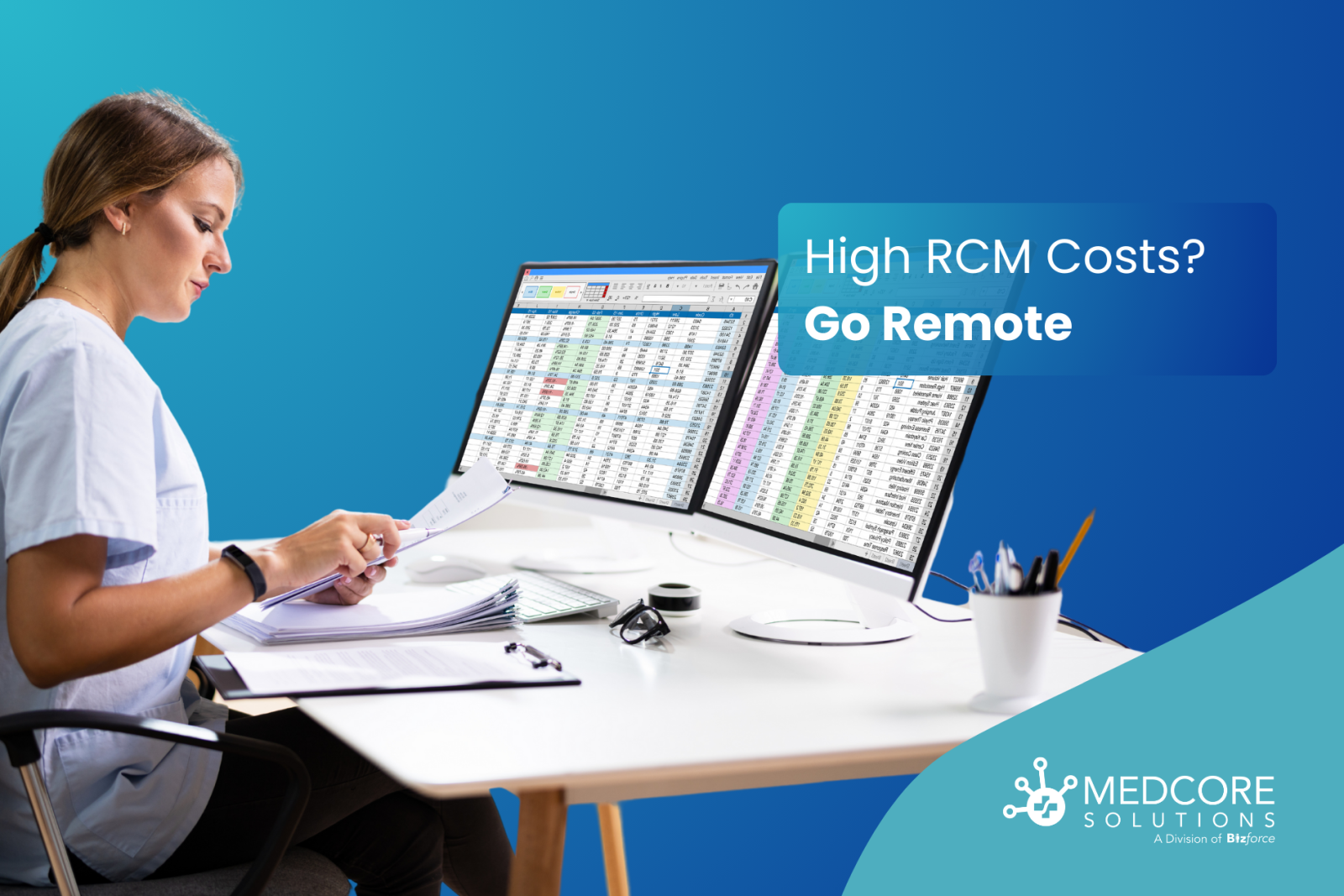
Healthcare providers today are under immense pressure. Patient volumes are rising, reimbursements feel tighter, and expectations for accuracy and speed keep increasing. In the middle of all this, one challenge continues to grow quietly but consistently: RCM costs.
Revenue cycle management touches every part of a healthcare organization, from patient intake and insurance verification to billing, coding, and follow-ups. When even one step slows down or breaks, the impact is felt across the entire practice. Cash flow suffers, staff morale drops, and leadership spends more time fixing problems instead of focusing on patient care.
The good news? There is a practical, proven solution that many providers are already using to regain control: going remote.
Why RCM Costs Keep Climbing
Rising RCM costs rarely come from a single issue. Instead, they are the result of small inefficiencies stacking up over time.
Staff shortages often mean existing employees are asked to do more, even if RCM tasks are not their primary expertise. Turnover creates constant training cycles. Errors in coding or billing lead to denied or delayed claims. Follow-ups take longer than they should because teams are stretched thin.
Technology alone does not fix these problems. This is where partners like MedCore Solutions help bridge the gap by providing experienced remote healthcare professionals who strengthen revenue cycle operations and reduce costly disruptions.
The Hidden Burden on Clinical Teams
Many healthcare providers do not realize how much administrative work pulls focus away from patient care. Nurses, front-desk staff, and even physicians often step in to resolve billing issues simply because there is no one else available.
This creates burnout and increases RCM costs in ways that are easy to overlook. Highly trained clinical professionals end up doing work that does not match their skill level. Meanwhile, patients experience longer wait times, rushed visits, or confusion about their bills.
When administrative tasks become overwhelming, the entire patient experience suffers.
What “Going Remote” Really Means and How It Impacts RCM Costs

Going remote does not mean losing control or quality. It means shifting specific RCM responsibilities to trained professionals who specialize in this work and operate as an extension of your team.
Remote RCM professionals handle tasks such as insurance verification, coding support, billing, payment posting, and follow-up. They work within your existing systems, follow your protocols, and align with your workflows.
Because their focus is entirely on revenue cycle tasks, they are often faster, more accurate, and more consistent. Over time, this focus directly reduces RCM costs by preventing errors before they happen.
Reducing errors before they become losses
Errors are expensive. A single coding mistake can delay reimbursement for weeks or months. Multiply that across hundreds or thousands of claims, and the financial impact becomes significant. Remote teams are built around process and repetition. They know where mistakes commonly occur and how to prevent them. This consistency lowers denial rates, shortens payment cycles, and reduces the need for costly rework.
As error rates decrease, RCM costs naturally follow.
Improving cash flow without expanding payroll
Hiring full-time, in-house staff is a long-term commitment. Salaries, benefits, onboarding, and ongoing training all add up quickly. For many practices, expanding payroll is not sustainable. Remote support offers flexibility. Providers can scale support up during busy periods and adjust during slower ones. You pay for the level of service you need, not for unused capacity.
This flexibility gives healthcare leaders more control over RCM costs while still maintaining operational stability.
Giving your staff room to breathe
When RCM tasks are handled efficiently, internal teams feel the difference immediately. Front-desk staff focus on patients. Billing questions decrease. Clinical teams spend less time addressing administrative issues. Morale improves, burnout decreases, and teams feel supported rather than stretched. This human impact is just as important as financial savings. Lower turnover alone can significantly reduce RCM costs over time.
Strengthening the patient experience
Patients often judge a healthcare provider not just by clinical outcomes, but by how smooth the overall experience feels. Confusing bills, unanswered questions, and repeated statements can damage trust. With better RCM processes in place, patients receive clearer information, fewer billing errors, and quicker resolutions. Payments are processed efficiently, and communication improves.
A smoother patient experience supports long-term relationships and reduces disputes that can drive up RCM costs.
Overcoming concerns about remote teams
Some providers worry that remote teams may feel disconnected or difficult to manage. In reality, successful remote partnerships are built on clear communication, defined roles, and shared accountability. Regular check-ins, performance tracking, and documented workflows keep everyone aligned. Many providers find that remote teams bring structure and clarity that was missing before.
Rather than adding complexity, remote support often simplifies operations and improves transparency.
A Smarter Way Forward for Healthcare Providers
High RCM costs are not inevitable. They are often a sign that systems have outgrown their original design. As healthcare continues to evolve, providers need solutions that are flexible, reliable, and cost-effective.
Going remote is not about replacing people. It is about supporting them with the right expertise in the right place. When administrative burdens are lifted, providers can refocus on what matters most: delivering quality care.
Final Thoughts

Healthcare is built on trust, compassion, and precision. When back-office challenges interfere with these values, everyone feels the strain. Addressing RCM costs through remote support allows providers to build stronger systems without sacrificing control or care quality. For many healthcare organizations, the question is no longer whether remote support works. It is how soon they can start using it to create a more sustainable, patient-centered future.
Ready to take control of your revenue cycle without adding strain to your team?
Partner with MedCore Solutions to access experienced remote healthcare professionals who help lower RCM costs while keeping patient care at the center. Let’s build a more efficient, sustainable future together.