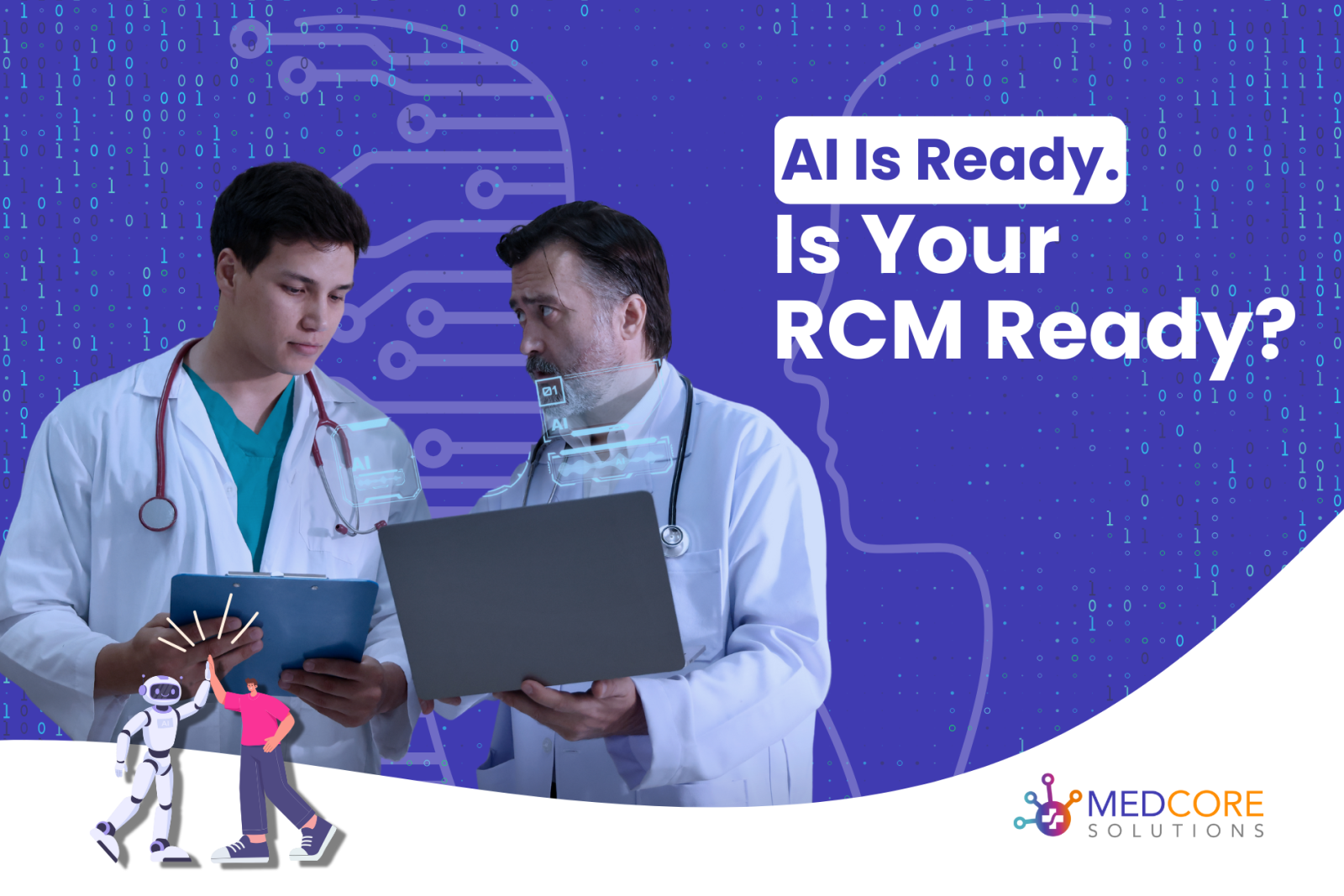
Revenue cycle management (RCM) has always been one of the most challenging parts of running a healthcare organization. It’s detailed, repetitive, and deeply tied to both patient care and financial stability. Today, artificial intelligence is changing how RCM works, but not always in the way teams expect. In fact, an AKASA and HFMA Pulse Survey found that about 46% of hospitals and health systems are now leveraging AI to support their revenue cycle management efforts. Yes, artificial intelligence in healthcare can dramatically speed up claims, reduce errors, and improve cash flow. But technology alone doesn’t fix broken processes. In fact, AI only delivers real results when teams are prepared to work with it, not around it.
For healthcare providers, understanding this distinction is the key to using AI wisely instead of being frustrated by it.
Why RCM Is Ripe for Artificial Intelligence in Healthcare
RCM involves hundreds of small, time-consuming tasks such as eligibility checks, coding validation, claim submission, denial tracking, and payment posting. Many of these steps rely on pattern recognition and repetition, which is exactly where artificial intelligence in healthcare excels.
AI tools can:
- Flag missing patient data before claims are submitted
- Predict which claims are likely to be denied
- Automate eligibility verification
- Speed up payment posting and reconciliation
On paper, this sounds like a perfect solution. Faster workflows. Fewer denials. Better margins.
But in practice, many healthcare teams discover that AI doesn’t magically solve RCM overnight.
The Hidden Truth: How Artificial Intelligence in Healthcare Mirrors Your Existing Processes

One uncomfortable truth about artificial intelligence in healthcare is this. AI amplifies what already exists.
If your workflows are clean, standardized, and well-documented, AI will likely make them faster and more efficient. But if your processes are inconsistent, poorly defined, or heavily dependent on individual workarounds, AI can actually magnify those problems.
For example:
- If patient intake data is entered inconsistently, AI cannot accurately complete missing details
- If coding practices vary by staff member, AI predictions become unreliable
- If denial reasons aren’t tracked properly, AI can’t learn from past outcomes
In short, AI does not replace operational discipline. It rewards it.
Speed Without Alignment Leads to More Errors
One of the biggest misconceptions about artificial intelligence in healthcare is that automation always means fewer mistakes. In reality, speed without alignment often creates more errors, just faster.
Imagine an AI-powered system submitting claims at high speed, but the eligibility data hasn’t been verified correctly. Denials pile up. Staff scramble to correct issues. The promised efficiency turns into cleanup work.
RCM success with AI requires teams to slow down before they speed up. That means:
- Reviewing workflows end-to-end
- Clarifying who owns each step
- Setting clear rules for data entry and validation
Once those foundations are in place, AI can finally do what it’s best at, scaling consistency.
Teams Built for AI Think Differently
Healthcare organizations that succeed with artificial intelligence in healthcare don’t just buy tools. They build teams that know how to use them.
These teams share a few common traits:
- They understand their workflows deeply, not just at a high level
- They trust data, but they also review and question it
- They invest in training, not just software licenses
- They treat AI as a partner, not a replacement
Importantly, AI-ready teams still rely on human judgment. When something looks off, they investigate instead of assuming the system is right.
This balance between automation and oversight is where real efficiency lives.
AI Doesn’t Eliminate People, It Changes Their Role

There’s often fear that artificial intelligence in healthcare will replace billing teams or reduce staff value. In reality, the opposite is happening.
AI removes repetitive tasks so teams can:
- Focus on complex denials
- Improve payer communication
- Analyze trends instead of reacting to problems
- Support patient billing questions more effectively
RCM teams become more strategic, not obsolete. But this shift requires leadership support and a mindset change. Staff need to be trained to interpret AI outputs, not just click buttons.
When teams are empowered this way, morale often improves alongside productivity.
Data Quality Is the Silent Success Factor
AI is only as good as the data it learns from. This is especially true in artificial intelligence in healthcare, where small errors can have major financial consequences.
Incomplete patient information, outdated payer rules, or inconsistent coding all weaken AI performance. Over time, these issues can cause mistrust in the system. Once trust is gone, teams revert to manual work.
Healthcare providers that see the best results treat data quality as a shared responsibility. Front desk staff, coders, billers, and leadership all play a role in maintaining clean, reliable information.
Good data fuels good automation.
Start With the Right Question: “Are We Ready?”
Before investing heavily in artificial intelligence in healthcare for RCM, providers should ask a simple but powerful question. Are our teams ready to use this effectively?
That readiness includes:
- Clear RCM workflows
- Consistent data practices
- Staff training and buy-in
- Leadership support for process change
AI works best when introduced as an upgrade to a functioning system, not a rescue plan for broken operations.
The Bottom Line
AI is undeniably speeding up revenue cycle management. But speed alone doesn’t equal success. For healthcare providers, artificial intelligence in healthcare delivers real value only when teams are aligned, trained, and prepared to work alongside it.
When the foundation is strong, AI becomes a powerful accelerator, turning RCM into a smarter, more predictable, and more sustainable operation.
The future of RCM isn’t just automated. It’s intentional.
If you’re ready to turn AI-driven potential into measurable financial performance, partner with MedCore Solutions and build an RCM operation designed for what’s next. Contact us here.